What Is Life Insurance? Benefits, Types and How It Works
Between careers, family responsibilities and everyday expenses, it's easy to put life insurance in the "I'll deal with it later" category. But while life insurance is largely about preparing for the unexpected, it’s also about protecting the people who depend on you. This blog article offers an accessible introduction to an occasionally complicated topic and discusses what life insurance is, how it works, why people buy it, the benefits, the different types, common myths and more.
What is Life Insurance?
Life insurance is a contract between an individual and an insurance company. In exchange for premium payments, the insurer agrees to pay a death benefit to designated beneficiaries when the insured person passes away. Some policies also offer living benefits, allowing policyholders to access a portion of their benefits during their lifetime.
Its primary goal is simple: to help ease the financial burden left behind in the event of your passing.
How Does Life Insurance Work?
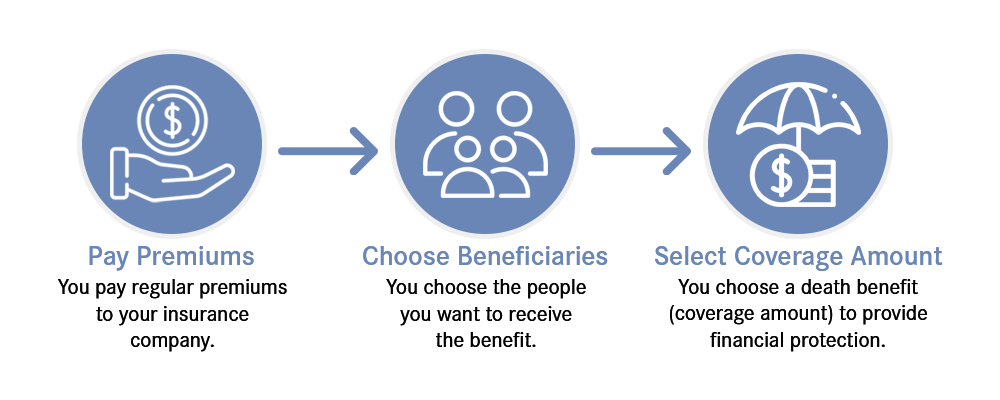
Policyholders choose a coverage amount, name their beneficiaries and pay premiums to maintain coverage. If the insured passes away and a valid claim is filed, beneficiaries typically receive a lump-sum payment that can help cover final expenses, mortgage payments, everyday living costs and lost income. The graphic below further illustrates all of this.
Why Do People Buy Life Insurance?
People buy life insurance to help protect the financial future of those they love.
- Income protection: Helps replace lost income so dependents can maintain financial stability.
- Debt and final expenses: Assists with mortgages, loans, medical bills and funeral costs.
- Peace of mind: Provides reassurance that loved ones may have financial support when it's needed most.
Types of Life Insurance
Whole Life Insurance: Offers permanent coverage with fixed premiums and the potential to accumulate cash value over time.
Term Life Insurance: Provides coverage for a specific period, often 10 to 30 years. It's commonly chosen for temporary needs such as income replacement or mortgage protection.
Group Universal Life Insurance: Often available through employer-sponsored plans, this permanent coverage can include flexible premiums, adjustable benefits, cash value features and optional riders.
How Much Coverage Do You Need?
The right amount of life insurance depends on your individual circumstances. Factors such as income, dependents, outstanding debts, long-term financial goals and existing savings can all help determine your coverage needs. Many people use their annual income as a starting point to estimate how much financial support their loved ones may need in their absence, then refine that estimate based on future expenses and other financial obligations.
Who Should Consider Life Insurance?
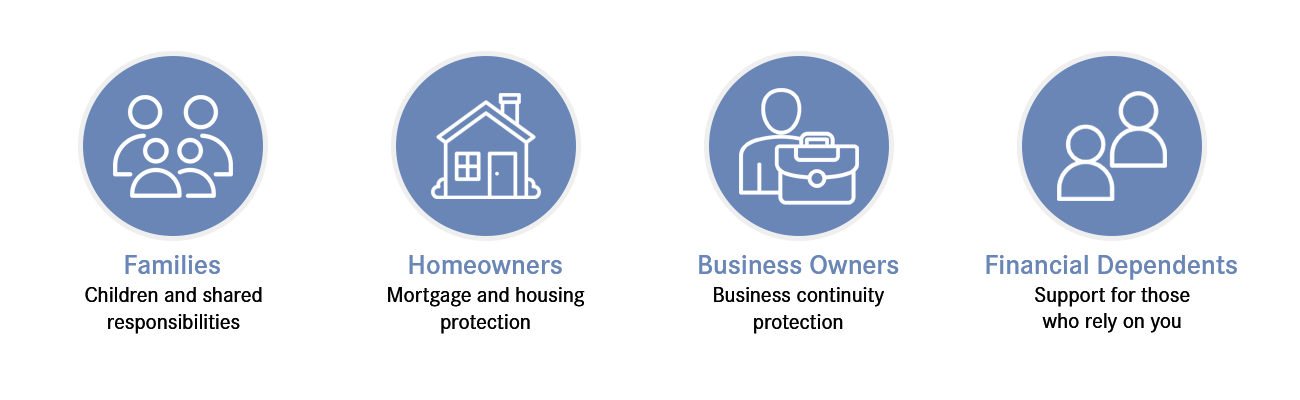
Life insurance may be worth considering if your absence would create a financial hardship for others, especially for the following groups:
Common Life Insurance Myths
- "It's too expensive." Many people overestimate the cost of coverage, particularly term life insurance.
- "I'm too young to need it." Coverage is often more affordable when purchased earlier in life.
- "My employer coverage is enough." Workplace benefits can be valuable but may not fully meet a family's long-term needs.
Statistics to Consider
Nearly half of Americans do not have life insurance coverage, with overall ownership holding at roughly half of U.S. adults.¹
Moreover, only about 36% of Gen Z adults report having coverage¹, reflecting lower participation among younger generations. Federal Reserve data also indicates that 55% of adults have enough savings to cover three months of expenses, highlighting the limited financial cushion many households have in place². Taken together, these trends underscore the gap between financial awareness and financial preparedness, reinforcing the importance of planning ahead.
The Bottom Line
Life insurance helps protect the future your loved ones have built and their lives going forward.
Whether it's Whole Life, Term Life or Group Universal Life, choosing the right coverage can help provide financial security based on your needs, goals and budget. Fortunately, ManhattanLife offers all three, helping individuals and families find protection that fits their stage of life.
To learn more about Life Insurance from ManhattanLife, please click below to visit our product pages:
Whole Life for Individuals, Families and Seniors
Whole Life, Term Life and Group Universal Life for Employer groups
For additional details on final expense insurance, read our blog: What Is Final Expense? Benefits, Costs and How It Protects Your Family.
Get in Touch
Works Cited
1. LIMRA and Life Happens. “Insurance Barometer Study.” https://www.limra.com/en/research/research-abstracts-public/2025/2025-insurance-barometer-study/
2. Board of Governors of the Federal Reserve System. “Survey of Household Economics and Decisionmaking (SHED), 2025 Report.” https://www.federalreserve.gov/consumerscommunities/shed.htm